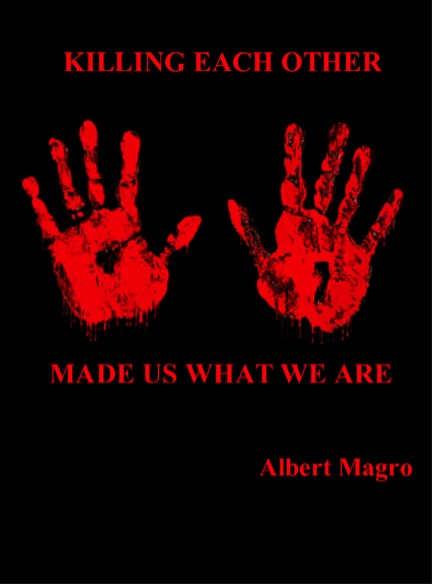
In the spirit of inquiry, what is presented here, in relation to your ideas, will contribute to extending and amending some of the historical explorations of ethics. From the beginning of our existence as a species, continuing to the present day, we have constructed our vision of reality. Using a variety of methods including faith, myth, innate understandings, practical experience, and rational thought, topics of truth and what is good or evil have set us to wondering. If that applies to you, you are in good company. The philosophical exploration of good and evil has preoccupied philosophers since antiquity. In western philosophy, as early as the 7th century BC, the founders rationally broached interesting questions related to the nature of humans, and their surroundings, breaking the tradition of answering those questions by myth alone.
You may wonder, how are these images related to the title of the book?
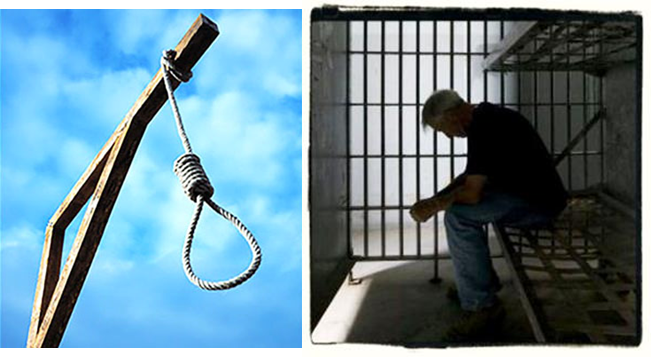
What was the positive pressure, acting on small populations of the genus Homo for millions of years, that brought us to our current feelings about good and evil?
What do the stone artifacts shown below have to do with the evolutionary development of our intelligence and ethics?
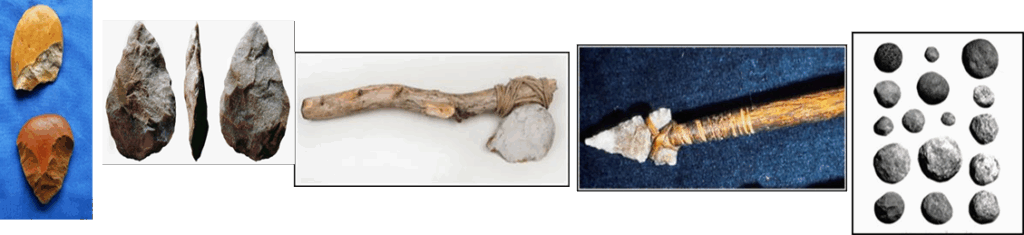
You will discover how the evolved patterns of survival of our species are related to the a priori understandings of good and evil. You will be able to converse why our species has so much more brain power than is needed to survive. You will become a purveyor of hermeneutics and be able to explain sacred writings in terms of what we were and what we are. You will see how the evolution of hominins is related to the bedrock of ethics as expressed in literature and religious mandates.
Do these images tell a story?
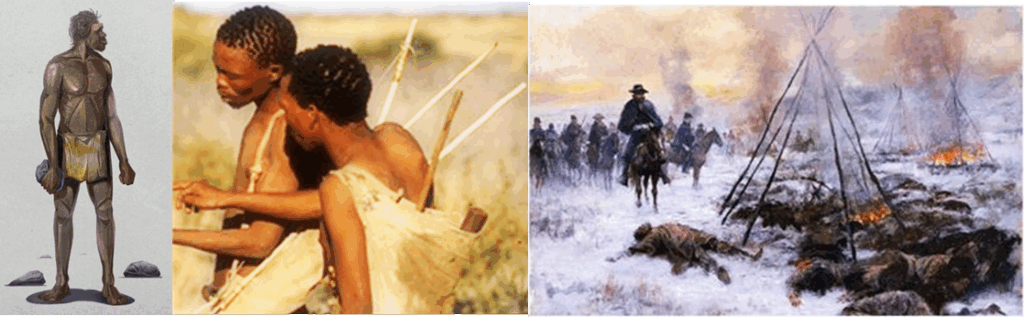
Throughout the presentations of this book a case is made that much of what we are is the result of selection pressures in the context of Darwinian Natural Selection with resultant adaptations that are encoded in our genes. You will be able to discuss the processes of how humans promoting the survival or elimination of other humans made us what we are. This selecting of ourselves, involved hominins of the genus Homo killing other hominins of the same genus, over millions of years, in Africa, when we existed as small demes, is fundamentally a process of humans selecting themselves.
The ABCs of our closest relatives. Is our ethics the same as theirs?
iiiiiiiiii8I
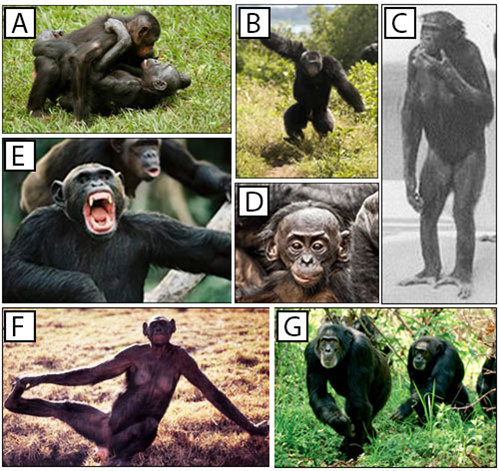
You will reflect whether there are evolutionary reasons allowing women to have a greater capacity to commiserate emotionally. You will reflect on whether women more readily turn to each other for emotional support. You will be able to discuss in evolutionary terms if women have superior social skills involving: better communication skills, better at voice recognition, better at interpreting body posturing and better at defusing potentially confrontational situations. You will be able to discuss from an evolutionary perspective if male/male relationships, female/female relationships and male/female relationships are unique to our species.
You will be interested in this Table.
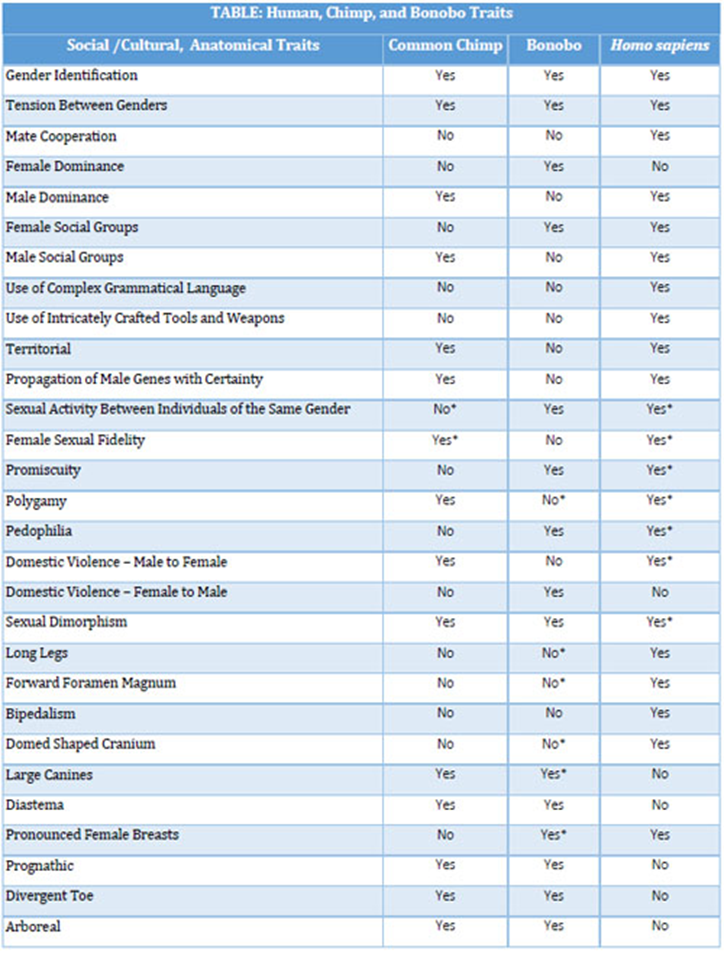
You will come to understand how we are tethered to our past. As you explore you will reflect upon whether accepted behaviors of our past is the concupiscence of the present. This book was written with the conviction that the evolution of hominins is the origin of our humanity. It is a topic that can shed light on the ontology and epistemology of ethics. I am fairly certain the topic will be of interest to you. You will come to understand evolutionary ideas within the field of paleoanthropology and the basic principles of evolution as they relate to morality. You will find how new ideas are intertwined with existing ideas while you conveniently assimilate and correlate them. The evolutionary perspectives in this book are compared with similar perspectives found in philosophy, literature, scripture and other writings. In the process, you will explore your own ideas regarding the interrelationship of evolution and morality.
This passages are excerpted from Killing Each Other Made Us What We Are, one of three volumes I’ve written exploring hominin evolution, ethics, and aesthetics. For faculty developing their own course around these ideas, I’m happy to share the volume — simply email your request to coursedevelopment@beyondmusings.com.