PLACES AND CREATIONS IMPORTANT TO VERA AND GINO


A NOVEL OF IDEAS AND HEARTS
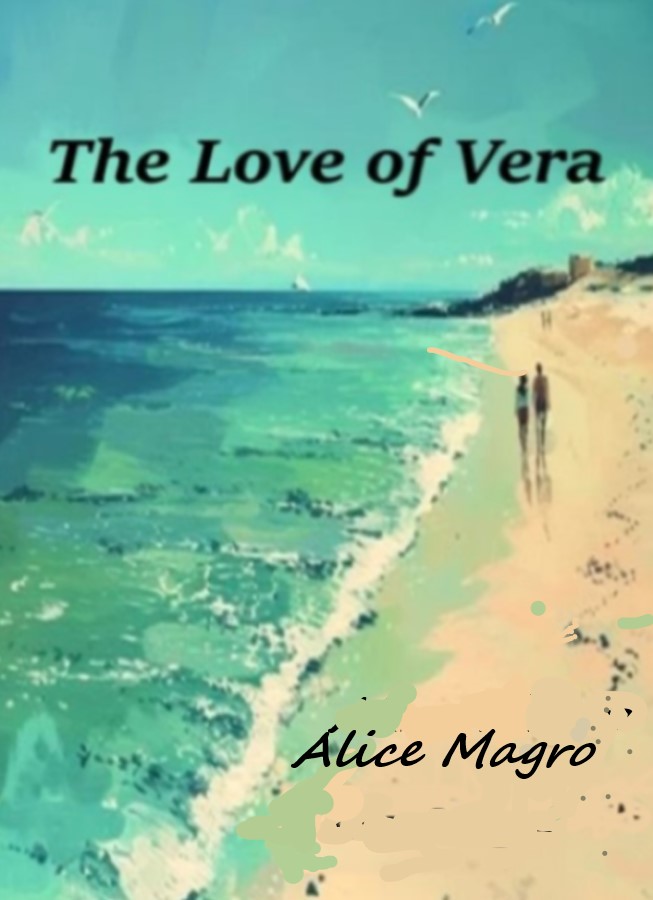
The Love of Vera begins with two affluent New Yorkers, Vera and Gino, navigating the final years of high school. As they dream of a life together, family heritage and moral dilemmas threaten to pull them apart.
But this isn’t just a romance. The novel seamlessly weaves evolutionary philosophy into the fabric of relationships, examining truth, beauty, and goodness not as abstract concepts but as forces shaping how we love, choose, and compromise. Through family conflicts, ethical dilemmas, and the corruption of power, philosophical ideas become tangible and urgent.
The result is a novel that makes ideas breathe through characters you care about—set against the backdrop of New York City and an Italian-American family’s complicated loyalties. The depth of character, the authenticity of Italian-American family bonds, and the philosophical weight hidden within the story create something rare: a novel where you fall in love with both the people and the ideas.
THE DECEMBER WALK
An insightful person, it occurred to her that in the realm of the inanimate, when devoid of life and love, there are no purposes. She realized that purpose is an invention of the human mind, which by necessity is the handmaiden to the survival and comfort of the animate. What disturbed her was the suspicion that life’s purposes, however noble they may be, could not allay one’s sorrow due to an unrequited love.
Despite her many talents, she was apprehensive about not being desirable. Her long, lovely legs and well-proportioned upper body were alluring and made her appear taller than she was. She was unassuming, appointed with a natural charm and went about underestimating her attractiveness and the value of her charismatic personality.
To the best of her recollection, all of Vera’s fond memories are associated with Gino’s presence. When apart, she felt alone and longingly would have Gino enter her mind. She thought about him idyllically as if in a pleasurable dream.
As the mellow light of the day was reluctantly leaving, she boarded the bus for the short ride through Central Park. For no discernable reason she liked the jostling and jangling that the moving bus provided.
Friday was the day she looked forward to for it was when she and Gino would get together. It was on Fridays when they would spend time together going someplace special or just walking around taking in the sights and sounds of the City.
It was Vera’s habit to move a discussion along with interesting questions. She was good at it and it was part of her charm.
“I know we are only 18, but what is your greatest disappointment?”
Gino after thinking about it awhile, hesitatingly said:
“Other people.”
As the clock approached 9 p.m., they left the Museum for the short walk to their townhouses. The air had turned colder with a bite to it, but was not bone chilling. Both raised their coat collars and Vera snuggled closer to Gino. He walked Vera to her doorstep and she leaned in to kiss him good night. Gino slightly pulled back.
CHRISTMAS SHOPPING IN THE CITY
There are relationships where one’s command is the other’s wish. How much sweeter is the caring when one’s wish is the other’s command. Such is the joy of gifting to those we love.
Vera and Yolanda’s conversations were usually on the level of ideas and events. Not today. Uncharacteristically, Vera was eager to talk about herself and other people.
“There is this girl named Sarah who throws herself at Gino. It is kind of unseemly really.”
“Is this girl Sarah from the Ballet School or York Prep?”
“She and I are at the same level at the School of American Ballet, but she attends the Professional Performing Arts School. This morning at the Jesuit School she forces her way in to sit next to Gino. You can’t get a word in edgewise with her there. Then, before our class at the Ballet School, she points out that I’m Gino’s cousin and asked if I would talk to him about taking her to some dance that she was going to over the holiday break.”
Yolanda, noting that Vera let go of her arm and was more animated than usual, smiled and asked:
“What did you say?”
“I told her that Gino was a star biathlete. He had no time. I told her he would be training at Lake Placid over Christmas break and after that he would be high-altitude training in cross country skiing at the Val Senales Glacier in Italy.”
“Was your tone about the same as it is now?”
Vera doesn’t answer but gesticulating she continues:
“They are rich. I looked it up. She doesn’t need anything. Her father owns a chain of retail stores where everything in the store is priced below ten dollars. They own over 200 stores nationwide. The chain has been growing rapidly. Their stock is on the New York Stock Exchange and trading very well.”
“Are you interested in this girl Sarah?”
“Well, I was interested in the business,” Vera responded rather sheepishly. “The stock has potential. It would be a good stock to have in your portfolio.”
“You sound like your father. Is she pretty?”
Not prone to lie and realizing she has been somewhat testy, Vera again interlocks her arm with Yolanda’s. While taking determined steps as if to signal the conversation was over, she sincerely says:
“I love you Aunt Yolanda.”
THE PROMISE
Beware of the sins of our fathers. When they persist, even the unborn can be guilty. It was a trying time, stubbornly tribal in the midst of political conflict that was striving to give birth to an acceptable synthesis. It was a time when the populace was forced to examine the purposes of its institutions, the essence of the truth and what is moral.
On a Saturday afternoon, when the staff of Triple A was not present, Armando and Enzo got together to have a talk. They had not met at the office for some time and both were looking forward to having an extended discussion. Although Armando visited the offices infrequently, his office was kept as he left it. The office was tastefully adorned with original fine art pieces. On the walls were cheerful paintings in bright colors by surrealistic and abstract expressionists artists. On the floor was a colorful rug with abstract designs in muted pastels. Armando filled two glasses of the fine whiskey as if in anticipation of a long talk.
When they meet, Armando and Enzo are inevitably drawn into discussing a wide range of topics. It is what the two wealthy men liked to do. They settled themselves comfortably in the leather chairs looking forward to each other’s company. Armando began talking about the history of their families and how it led them into using the physical power of the mafia.
“It was the continuity of our Sicilian culture,” he said. “It makes it acceptable for justice to be personal.”
Armando always felt that the interrelationship between good and evil was complex. His involvement in having people killed entered his thoughts. Armando went on to make the point that Cosa Nostra families were fundamentally unethical. He proceeded to say that extortion, intimidation, theft and the selling of drugs were all parasitic endeavors detrimental to society. Enzo unhesitatingly gave his opinion.
“If you are saying that we should not have them as clients, I would disagree. There are corporations that gladly lobby to dispense with all environmental safeguards and are involved in corruptly buying lines in the tax codes. We invest and profit from those corporations. We have politicians as clients who are involved in gerrymandering along with voter suppression and dismantling the agencies that are foundational to our Constitutional Republic. They lie without blinking. Nothing shames them.”
Looking a little disturbed with an exaggerated solemnity, Armando asked:
“Why is it when we talk this way, I feel as if I have to go to confession?”
Enzo in a strange and philosophical manner continued.
“I once had a conversation with Gino when he was reading Dante‘s Inferno for class and he said that Dante put liars, and traitors to kin, deeper in hell than murderers. He asked me if I thought wholesale lying was worse than an individual murder.
Armando somewhat surprised asked:
“What did you say?”
“I didn’t know what to say,” Enzo humbly responded: “All I could think of is that wholesale lying could disrupt the very fabric of society and maybe Dante was right.”
“You said that?”
“Yeah.”
“Christ Enzo, that was pretty good. I guess we’ll have to start blowing the heads off wholesale liars.”
The irony of the statement tickled Enzo into an extended laugh. Actually, Enzo was a Yale Law School graduate and was a lot more knowledgeable than he would lead people to believe.
REVEREND BRENNAN THE JESUIT EDUCATOR
An enlightened man, he knew that as the patterns of survival change, it alters what society considers unethical. As the selection pressures proceed, the ways of the past can be the sins of today. It is at the heart of the intractable problem of concupiscence.
On the upper eastside of Manhattan, at a prestigious Jesuit High School that Saturday morning, there was a muted hum of voices in the hallway outside of the first-floor auditorium. The students were partaking of refreshments and talking to each other in small groups.
Vera was talking to Deric Hurt, a star basketball player, who was a good friend and classmate of Gino’s. Deric was very tall and tan skinned. His mother was Irish Catholic and his father was a professional basketball player who being biracial himself understood the ignorance of racial prejudice. Deric was striking in appearance with penetrating coal black eyes and wavy black hair. He wore eye glasses, was soft-spoken, and had the demeanor of a pleasant, young man who was easy to like and when you got to know him, easy to admire. He was articulate and intelligent with a delicate appreciation for the feelings of others. He was not sensitive about race or skin color but was sensitive about his height.
Off in the distance Gino was talking to Sarah Gilberg, a dancer who Vera knew from the School of American Ballet. Sarah was very pretty and both she and Vera had the attractive shape of a trained ballet dancer. While talking to Deric, Vera would compulsively glance over to see what Gino and Sarah were doing and then looked more attentively as Sarah was writing in a small notebook. Vera could not help wondering what Sarah and Gino were talking about and why Sarah was writing down what Gino was relating to her.
It was 10 a.m. and the students had already entered the classroom and taken their sets. Vera and Gino took desks next to each other and Sarah who entered class a few minutes later took a desk next to Deric.
Father Brennan smiled. The creative priest then added:
“No Ethan, it was much earlier in our evolution. This began in Africa over 3 million years ago when tools were converted to weapons. The killing was between small breeding populations called demes. You need to take seriously the idea that killing each other over millions of years was an evolutionary selection pressure. Let me say explicitly, if you said killing each other helped make us what we are, you would be quite right.”
THE ASSIGNMENT
A tilt of the head, a voice, a smile, a countenance, a pose, a gesture, it’s irrational and can be instantaneous on the tip of Cupid’s arrow. It is in contrast to shared values encased in one’s behavior, accompanied by at least a modicum of admiration. That is the difference between the flame of loving and the ember of liking.
Gino was in the mode of completing their assignment. Sarah also made an effort, but she was openly flirtatious. She would put her hand on Gino’s arm while talking and got close to him pressing her shoulder against his, feigning she was trying to look at his computer and hers at the same time. Gino, while being respectful, took it well and rather liked it.
She had been thinking about it for some time. Sarah put forth the idea:
“Why don’t we, as part of what we hand in to Father Brennan, show how the instructions and the prohibitions of the Decalogue, what you call the Ten Commandments, are in accord with the patterns of survival?”
Gino enthusiastically acknowledged the idea and encouraged Sarah to go on. She continued:
“For example, the prohibition of adultery, what you Catholics list as the Seventh Commandment, can be shown to be a mandate to prevent non-compliance with things on the list of human patterns of survival such as, the evolved drive of males to propagate their genes with certainty, mate cooperation, commitment of both parents to long-term care of progeny, and the family structure as a life-sustaining unit. The moral imperative of the Eighth Commandment, Thou shall not steal, I think, is rooted in the fact we are rational social animals. If everybody is stealing from each other, trust throughout our social structure would be totally disrupted. We could make those connections for all the Commandments.”
Gino liked Sarah’s idea.
“It will very clearly show that evolutionary concepts are not in conflict with religious ethical mandates” he said.
The embarrassed young man immediately realized his comment was blatantly trivial, but was totally surprised when Sarah said:
“Wit in many instances is a defense against a lack of wisdom. I’d rather have a man who is boyish in attitude while actually being strong and wise.”
That comment put Gino back on the track. He didn’t know Sarah very well and always assumed her to be nothing more than coquettish. He was beginning to see she was more than flirtatious and suspected her to be a person of substance who thought about things and had unique personal understandings.
BEGIN YOUR JOURNEY
This is the essence of what Alice explores in “The Love of Era” – how our evolved drives and our rational minds create the complex dance of attraction, ethics, and meaning. The novel invites us to contemplate whether our deepest moral intuitions and our most intimate feelings of love might both emerge from the same evolutionary crucible that shaped humanity over millions of years. The Love of Vera weaves together evolutionary philosophy, ethical inquiry, and the unpredictable chemistry between young minds discovering both ideas and each other. Find your copy of The Love of Vera below and contribute your insights to this engaging novel.