If you intend to peruse this book, you probably are an individual who takes pleasure in the exploration of ideas. All intellectual pursuits are somewhat of a journey where there is an assembling of ideas. This book is an exploration about our feelings of what is beautiful. What is presented makes the claim that one’s feelings about beauty are adaptations brought about by how our ancestors evolved. The instant recognition of beauty is something we experience devoid of any self-serving agenda. The feeling we experience is pleasurable and this pleasure occurs sans-thought, as if is something that arises within us from our infancy. This psychological sensation is what philosophers refer to this as —–an aesthetic response.
In Western culture, acknowledgement of our susceptibility to being captivated by beauty goes back a long way and possibly precedes the epic, mythological tales of Minoan Greek culture. Evolutionary Aesthetics addresses what it is in our evolved anatomical and cultural development that predisposes us to have an aesthetic response.
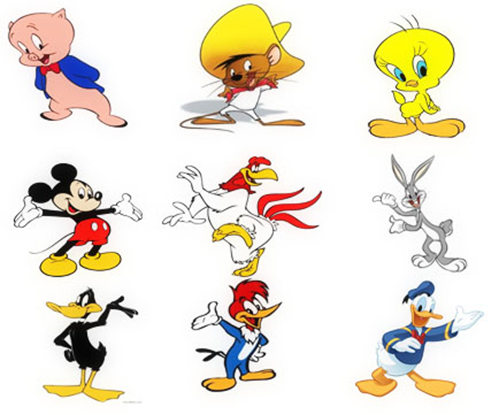
Why do all of these cartoon characters have a large white of the eye?
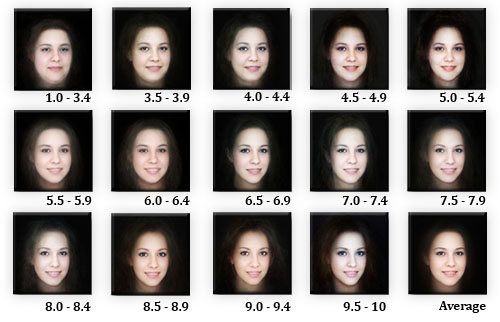
The female faces below were rated for attractiveness by a large number of evaluators with 1 being the least attractive and 10 the most attractive. Do you agree with the ratings of the faces? Can you explain from an evolutionary perspective why you may or may not agree?
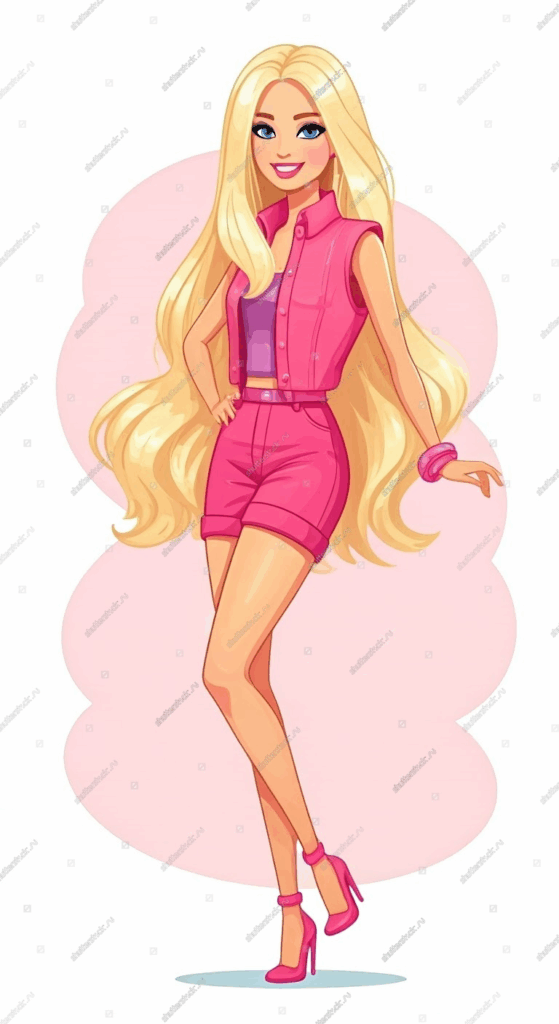
Why is Barbie beautiful? The Barbie doll was a tremendous commercial success. Can an evolutionary perspective, of the beauty of human form, tell you why?
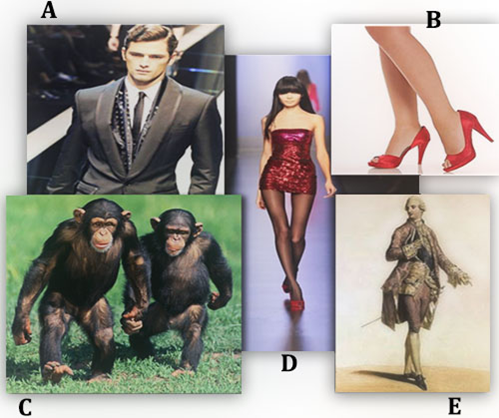
Images A, B, D and E are images of fashion preferences. How is our taste in fashion related to the image C?
Why do we find the rising sun and full moon beautiful?

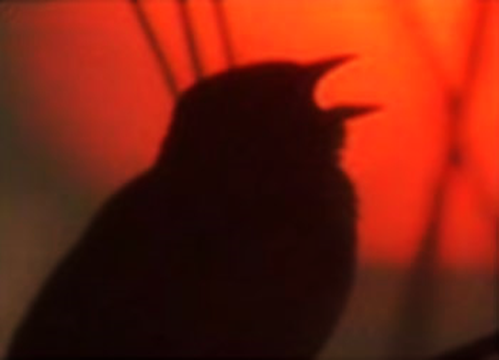
Why is the sound of singing birds pleasing to the ear?
Why are we so preoccupied with teeth?

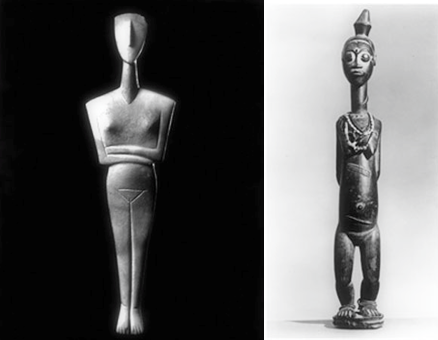
Why do both of these figurines illicit an aesthetic response?
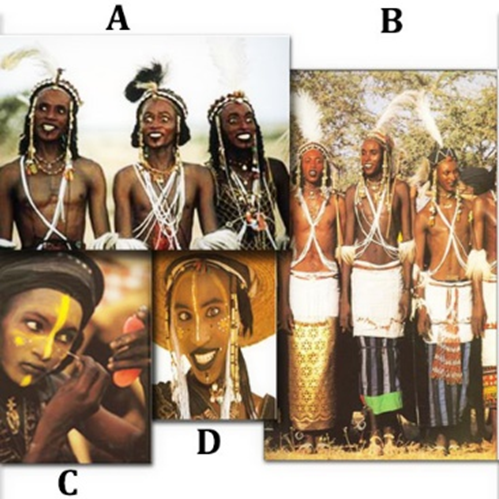
From an Evolutionary Aesthetic perspective, what are these men doing?
This book was written in the belief that you will perceive it as one that contains conjectures that are not commonplace. Thus, this book is put forth in the hope that it will produce a kind of thinking that can lead you into other areas giving you the pleasure of engaging in deliberations that include your own unique ideas about aesthetics yet to be explored. Try it. In the process of reading this book, you may want to extend and amend the ideas presented. As such, the book may be of interest to you and may even delight you.
These passages are excerpted from The Taboo That Made Us Beautiful, one of three volumes I’ve written exploring hominin evolution, ethics, and aesthetics. For faculty developing their own course around these ideas, I’m happy to share the volume — simply email your request to coursedevelopment@beyondmusings.com.